


Short Answer: For most Tucson homes, xeriscaping is the better fit. It uses far less water, needs less upkeep, and handles our heat and monsoon storms well. Traditional landscaping, with a lawn and thirstier plants, can still work in small, shaded areas if you accept the higher water bill and the extra work. Good Tucson landscape design often blends the two so each area gets what it needs.
Choosing between xeriscaping and a traditional yard is one of the first big decisions Tucson homeowners face. Both can look beautiful, but they behave very differently in the desert. Here’s an honest comparison to help you decide.
What Each Style Actually Means
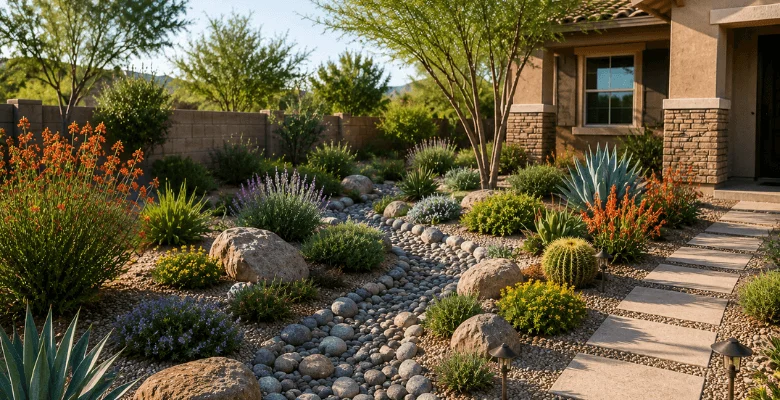
Xeriscaping is designing a yard to use as little water as possible. It relies on native and drought-tolerant plants, gravel or decomposed granite, efficient drip irrigation, and smart layout. It doesn’t have to mean a yard full of rocks. Done well, it feels layered, colourful, and intentional.
Traditional landscaping usually centres on a lawn, borders of non-native flowering plants, and sprinkler irrigation. It’s the style many of us grew up with, and it’s designed for climates with regular rainfall and milder summers.
Xeriscaping: The Case For
Advantages:
- Uses significantly less water once plants are established
- Needs less mowing, fertilising, and weekly upkeep
- Handles triple-digit heat and long dry spells well
- Supports pollinators like bees, butterflies, and hummingbirds
- Often costs less to maintain year after year
Where it can fall short:
- Upfront design and installation can cost more than seeding a lawn
- New plants still need regular watering for the first year or two
- Poorly planned xeriscapes can look sparse or “all gravel”
Traditional Landscaping: The Case For
Advantages:
- A soft, green lawn feels familiar and comfortable underfoot
- Lower upfront cost for a basic lawn
- A wide plant palette beyond desert species
Where it struggles in Tucson:
- High water demand, especially from May through September
- Frequent mowing, fertilising, and pest control
- Browning and die-back during extreme heat, even with regular watering
- Higher long-term water bills
Side-by-Side Comparison
| Factor | Xeriscaping | Traditional |
| Water use | Low once established | High, especially in summer |
| Maintenance | Light, mostly seasonal | Frequent mowing and feeding |
| Heat tolerance | Strong | Often struggles |
| Upfront cost | Moderate to higher | Lower for a basic lawn |
| Long-term cost | Usually lower | Usually higher |
| Best for | Most Tucson yards | Small, shaded areas |
What About the Lawn?
Plenty of homeowners still want a patch of green, and that’s reasonable. The trick is being intentional about where it goes and how big it is. A small, defined area gives kids and pets somewhere to play without committing the whole yard to heavy watering. Many Tucson homeowners choose artificial turf tucson properties for this purpose, since it stays green without irrigation or mowing. Good installation matters here, with proper drainage underneath and heat-rated material, so the surface stays comfortable and doesn’t trap odours.
Ways to keep a green space without overdoing it:
- Keep the lawn or turf small and well defined
- Place it near the patio where it’s actually used
- Surround it with gravel and native plants to frame it
Which Style Fits Your Situation?
Xeriscaping tends to be the better choice when:
- You want lower water bills and less upkeep
- Your yard gets full sun for most of the day
- You’d rather spend weekends enjoying the yard than maintaining it
- You like a desert-inspired look with plants such as agave, red yucca, and palo verde
Traditional landscaping may still work when:
- You have a small, shaded area that suits a lawn
- You’re willing to accept the higher water use and upkeep
- Your HOA has specific requirements about front yard greenery
Hybrid Approaches Are Popular
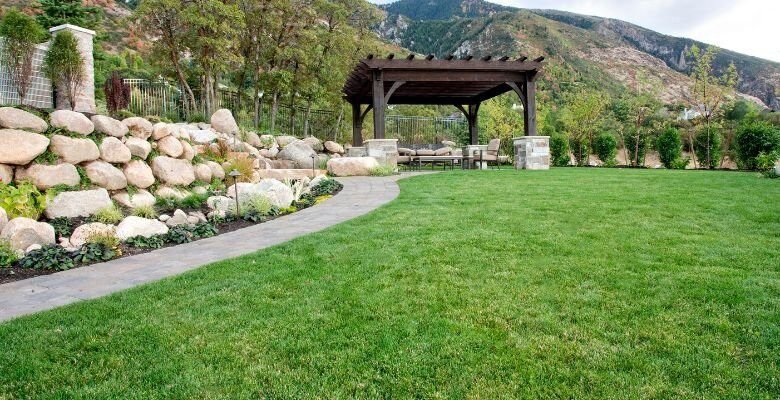
You don’t have to pick one extreme. Many successful yards mix both styles, using xeriscape principles across most of the property while keeping a small area of turf or a few thirstier plants close to the house.
A balanced hybrid might include:
- Native plants and gravel in the front yard for curb appeal and low water use
- A small turf or lawn area in the backyard for play and relaxation
- Drip irrigation on separate zones so each plant type gets the right amount
- A patio or seating area to make the space usable in the evenings
Common Mistakes to Avoid
- Removing a lawn without a plan for drainage or replacement planting
- Covering everything in gravel with no plants or shade
- Skipping irrigation because the plants are “drought-tolerant”
- Planting too close together, then fighting overgrowth
- Choosing plants without checking mature size, sun needs, or frost tolerance
Don’t Forget Hardscaping
Plants are only part of the picture. Walkways, patios, and seating areas shape how a yard is used every day. Choosing the right surface for those areas matters just as much as choosing the right plants, since they take heat, foot traffic, and monsoon rain all year. Many homeowners lean towards pavers tucson az projects for patios and paths, since individual units handle ground movement better than a single concrete slab and can be repaired section by section. Good installation, with a compacted base and proper drainage, is what keeps them looking right.
Bringing It All Together
There isn’t one right answer for every home, but for most Tucson properties, xeriscaping wins on water use, upkeep, and heat tolerance. A thoughtful blend, with a small green area for comfort and the rest designed for the desert, gives you the best of both worlds.
At Legacy Landscaping and Design, we help homeowners across Tucson, Marana, and Oro Valley figure out what makes sense for their property. Our approach to Tucson landscaping starts with how you actually use your yard, then builds a plan around your sun, soil, and budget. If you’re weighing your options, Legacy Landscaping and Design is happy to walk you through them.
Frequently Asked Questions
Is xeriscaping cheaper than a traditional lawn?
Often yes over time, thanks to lower water bills and less maintenance. Upfront costs can be higher, depending on materials and design.
Does xeriscaping mean I can’t have any grass?
No, many yards keep a small lawn or turf area. The goal is to use water thoughtfully, not remove every green space.
Will a xeriscape yard look dry or empty?
Not if it’s planned well. Layered plants, boulders, pathways, and lighting make a desert yard feel full, colourful, and welcoming.
How long do xeriscape plants need extra watering?
Typically for the first year or two while roots establish. After that, most need only occasional deep watering, mainly in the hottest months.
Can I convert my existing lawn to a xeriscape?
Yes, many homeowners do it in phases. A site visit helps with planning drainage, irrigation, and plant placement.