


Short Answer: For most Tucson homes, low-voltage LED lighting is worth it if you want bright, reliable light that lasts for years. Solar lights cost less upfront and are easy to install, but they tend to be dimmer and less consistent. If you want a lasting result, a trusted landscape designer Tucson homeowners recommend can help you decide which option fits your yard and budget.
Why Lighting Matters in the Desert
Tucson evenings are one of the best parts of living here. Cooler air, clear skies, and a quiet yard make outdoor time easy to enjoy. Good lighting helps you use your space after dark, makes walkways safer, and shows off your plants and patio.
But with so many options out there, it’s hard to know where to put your money. Let’s compare the two most popular choices in simple terms.
What Is Low-Voltage LED Lighting?
Low-voltage LED lighting connects to a transformer that plugs into an outdoor outlet. The transformer lowers the power to a safe level and sends it through cables buried in your yard to each light.
What you get:
- Bright, steady light
- Many fixture styles for paths, trees, walls, and steps
- Timers, photocells, and smart controls
- Long-lasting LED bulbs
What Is Solar Landscape Lighting?
Solar lights have a small panel and battery built into each fixture. They charge in the sun during the day and glow at night. There are no wires, so you can place them almost anywhere.
What you get:
- Simple, do-it-yourself setup
- No electrical work
- No impact on your electric bill
- Lower upfront cost
Pros and Cons of Low-Voltage LED
Pros
- Brighter and more consistent light
- Works every night, whatever the weather
- Fixtures often last for many years
- Easy to expand later
- Controls let you set schedules and dimming
Cons
- Higher upfront cost
- Needs proper wiring and layout
- Repairs are easier with a pro if a cable gets cut
- Works best when planned before you plant or build
Pros and Cons of Solar Lighting
Pros
- Cheap and easy to install
- No wires to bury
- Good for small accents or temporary spots
- Tucson gets plenty of sunshine for charging
Cons
- Usually dimmer than wired lights
- Batteries and panels wear out and need replacing
- Dust on panels reduces charging, and Tucson has plenty of dust
- Performance may drop on cloudy monsoon days or in shaded spots
- Cheap fixtures can fade or crack in intense heat
Side-by-Side Comparison
| Feature | Low-Voltage LED | Solar Lighting |
| Brightness | Strong and steady | Often dimmer |
| Upfront cost | Higher | Lower |
| Installation | Pro recommended | DIY friendly |
| Reliability | Very high | Varies by quality and sun |
| Lifespan | Long | Shorter, with battery changes |
| Controls | Timers, dimmers, smart options | Basic on/off |
| Best for | Full yard designs | Small accents |
How Each Handles Tucson’s Climate
Heat: Quality LED fixtures are built for outdoor use, but cheap plastic solar lights can fade, warp, or crack under strong sun. Choose metal or high-grade materials when you can.
Dust: Our dusty air can coat solar panels and cut charging. They need regular wiping to keep working well.
Monsoon season: Storms can bring cloudy days and heavy rain. Wired lights keep going, while solar fixtures may run dim for several nights.
Dark skies: Tucson takes its night sky seriously, and local rules may limit outdoor light brightness and direction. Choose warm, shielded fixtures that point downward, and check local requirements before installing.
Ideas for Where to Use Each
Low-voltage LED works great for:
- Pathways and driveways
- Patios and outdoor kitchens
- Uplighting palo verde trees and large cactus
- Steps and retaining walls
- Whole-yard lighting plans
Solar works well for:
- Small garden accents
- Temporary party lighting
- Spots far from an outlet
- Budget-friendly touches along a fence
Lighting Your Desert Plants
Desert plants look amazing at night. A soft uplight on an agave or saguaro creates dramatic shadows on a wall. A small spotlight can also show off a pincushion cactus in a gravel bed or planter, bringing out its tiny round shape and bright spring blooms. Keep lights a little away from plants so the heat from the fixture doesn’t touch them.
The Cost Question
Solar lights may cost very little to start, but replacing batteries or whole fixtures every few years adds up. LED systems cost more upfront, yet they often last far longer and need less maintenance.
Think about how long you plan to stay in your home and how much light you really want. Many homeowners use both: wired lighting for key areas and a few solar accents for extra touches.
Plan Lighting Before You Build
The easiest time to add wiring is during landscaping, before pavers, turf, and plants go in. That’s why many people bring in a landscape architect Tucson homeowners trust early in the process. A good plan places lights where they’re needed, hides cables, and avoids damage later. It can also help you balance light with drainage, irrigation, and plant placement.
Thinking About the Whole Yard
Great lighting works best as part of a complete plan. When you’re researching landscape lighting Tucson homeowners rely on, ask to see examples of finished projects at night and how fixtures look in the daytime. Good lighting should be subtle and natural, not harsh or overly bright. It should highlight your yard’s best features while keeping glare low for you and your neighbors.
This kind of thoughtful landscaping Tucson families enjoy blends plants, hardscape, water features, and lighting into one cohesive design.
Mixing Lighting With Other Features
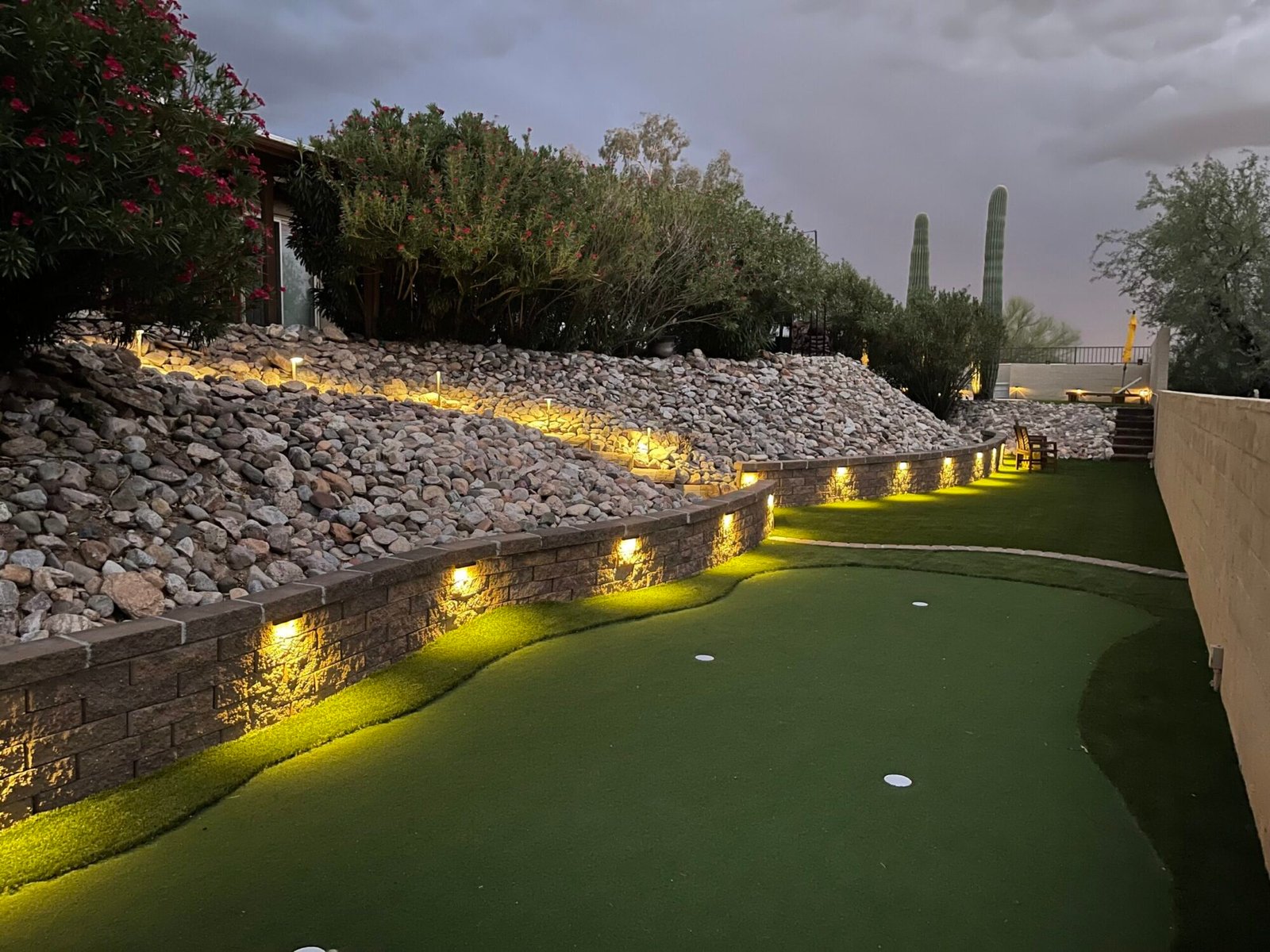
Lighting looks even better when paired with other yard upgrades. A small turf tucson az homeowners choose for pets or play areas can be softly lit along its edges for safety and ambiance. Pair it with pavers, gravel, and native plants for a clean, low-maintenance look. Just keep fixtures a safe distance from turf, since extreme heat from some lights can damage synthetic fibers.
Ready to Light Up Your Yard?
If you’re deciding between low-voltage LED and solar, think about your goals, budget, and how much you want to use your yard at night. At Legacy Landscaping and Design, we help Tucson homeowners create outdoor spaces that look great and work well. Visit legacylandscaper to start planning your lighting project.
Frequently Asked Questions
1. Is solar lighting good enough for Tucson?
It works for small accents thanks to our sunshine. For bright, steady, all-night light, wired LED is usually more dependable.
2. How long does low-voltage LED lighting last?
Quality LED fixtures can last many years. Lifespan depends on the product, installation, and how well it’s maintained.
3. Can I install low-voltage lighting myself?
Basic kits are DIY friendly, but a professional layout gives better coverage, safer wiring, and fewer problems later.
4. Will outdoor lighting raise my electric bill?
LED systems use very little power, so the impact is usually small. Timers help you save even more.
5. Can I light a pincushion cactus without harming it?
Yes, use a small LED spotlight placed a little away from the plant so heat doesn’t touch it.