


Short Answer: Porcelain pavers are tougher, lower maintenance, and resist stains and fading, while natural stone offers a one-of-a-kind look and often stays comfortable underfoot. For most busy homeowners, porcelain is the easier choice. If you love an organic, earthy feel, natural stone is hard to beat. Experienced Tucson landscapers can help you pick the right one for your yard, budget, and lifestyle.

Two Great Options, Two Different Personalities
Choosing a patio surface in Arizona is a big decision. The sun is strong, summers are long, and monsoon storms can arrive fast. Your patio has to look good and handle all of it.
Natural stone and porcelain pavers both do well here, but they feel very different. Let’s compare them in plain, simple terms.
What Are Natural Stone Pavers?
Natural stone is cut from the earth. Popular choices for Arizona patios include:
- Travertine: Soft, warm tones and a textured surface
- Flagstone: Irregular, rustic shapes that suit desert styles
- Sandstone: Earthy colors that blend with the landscape
- Slate and limestone: Rich colors and natural patterns
Every piece is slightly different, so no two patios look exactly alike.
What Are Porcelain Pavers?
Porcelain pavers are made from dense, fired clay. They’re manufactured to look like stone, wood, or concrete, or to have a clean modern finish. They’re typically thinner than traditional pavers but very strong when installed correctly.
Because they’re man-made, colors and patterns are consistent, which makes planning your design easier.
Pros and Cons of Natural Stone
Pros
- Authentic, one-of-a-kind look
- Blends beautifully with desert surroundings
- Many types stay relatively cool underfoot
- Adds a high-end feel to patios and pool decks
Cons
- Usually needs sealing to resist stains and wear
- Can be porous, so spills may soak in
- Colors may shift or fade over time
- Often costs more and requires skilled installation
Pros and Cons of Porcelain Pavers
Pros
- Very low maintenance
- Highly resistant to stains, fading, and scratches
- Doesn’t absorb water the way many natural stones do
- Consistent color and style options
- Wide range of looks, including wood-look and modern tiles
Cons
- Can look less natural to some people
- Dark colors may get hot in direct sun
- Needs careful installation on a well-prepared base
- Cutting and handling require special tools
Side-by-Side Comparison
| Feature | Natural Stone | Porcelain Pavers |
| Look | Organic and unique | Clean and consistent |
| Maintenance | Sealing recommended | Very low |
| Stain resistance | Varies by stone | Excellent |
| Fade resistance | Can change with sun | Very good |
| Heat comfort | Often good in light tones | Good in light colors |
| Design options | Natural variety | Stone, wood, and modern looks |
| Best for | Rustic and classic designs | Modern, low-fuss patios |
How Each Handles Arizona Heat
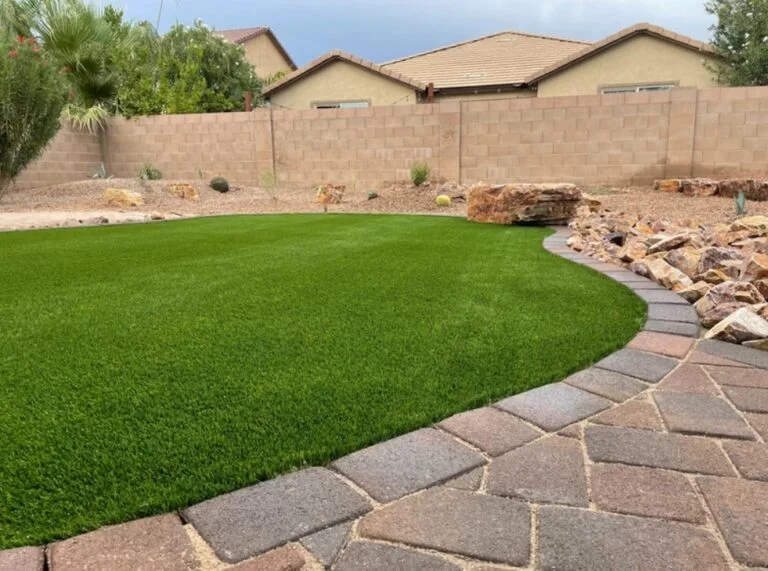
Both materials can handle our climate, but color matters most. Lighter shades reflect more sunlight and feel more comfortable on bare feet. Darker tones absorb heat, no matter what they’re made of.
If your patio gets full afternoon sun or surrounds a pool, choose lighter colors and consider adding shade with a pergola, ramada, or trees. Walk on a sample in the afternoon sun if you can. It tells you more than a brochure.
How Each Handles Monsoon Season
Heavy rain can test any patio. Proper slope and drainage are just as important as the material.
Porcelain’s dense surface doesn’t soak up water, which helps resist staining and mildew. Natural stone is more porous, so sealing helps protect it from moisture and spills. In both cases, a strong base and good drainage prevent sinking, shifting, and standing water.
Which Is Easier to Maintain?
Porcelain usually wins on convenience. A simple sweep and occasional rinse keep it looking fresh. Natural stone may need periodic sealing and gentle cleaning, depending on the type.
If you love a natural look and don’t mind a little upkeep, stone is worth it. If you’d rather spend weekends enjoying the patio, porcelain may suit you better.
Matching Your Style
Natural stone fits best if you want:
- A rustic or traditional desert look
- Soft, earthy tones
- A patio that feels like part of the landscape
- A high-end, handcrafted character
Porcelain fits best if you want:
- A modern, clean design
- Low maintenance
- Consistent color across a large area
- Wood-look or concrete-look styles without the upkeep
Planning Your Patio the Smart Way
Great patios start with a good plan. Think about how you’ll use the space, where shade will fall, and how water will drain. Thoughtful landscape design Tucson homeowners love balances all of this, so your patio looks great, works well, and fits your yard.
Think about plants too. Native choices like agave, desert spoon, and palo verde pair well with both materials. Keep plants a little away from the edges so roots don’t push up the pavers.
Setting the Mood After Sunset
Evenings are when patios shine. Lighting makes the space feel warm and welcoming. If you’re wondering about the types of string lights, here are popular choices:
- Bistro or globe lights: Round bulbs with a classic, cozy glow
- Edison-style bulbs: Warm, vintage look
- Fairy lights: Tiny lights great for pergolas and trees
- Solar string lights: Easy to hang, though often dimmer
- LED string lights: Efficient and long-lasting
Use outdoor-rated products and keep cords away from wet areas. Warm white tones look beautiful against both stone and porcelain.
Why Installation Matters Most
Even the best paver won’t last if it’s installed poorly. Look for:
- A deep, well-compacted base
- Proper slope for drainage
- Quality edge restraints
- Correct joint materials
- Experienced installers who understand desert soil
Cutting corners here is the fastest way to end up with cracked, uneven, or sinking pavers.
Cost Considerations
Prices vary widely based on the material, size, pattern, and site preparation. Both options can range from moderate to premium. The best approach is to get a written estimate based on your yard and compare what’s included, not just the bottom line.
Think about long-term value too. A patio that’s easy to clean and holds up well can save money and stress over time.
Making Your Final Choice
When you’re comparing options for pavers Tucson, AZ homeowners trust, ask to see real samples in your own yard. Check color, texture, and how warm they feel in the afternoon sun. Ask about warranties, sealing needs, and how each material fits your design goals. A good team will walk you through the trade-offs honestly.
Ready to Build Your Dream Patio?
Whether you choose natural stone, porcelain, or a mix of both, the right plan makes all the difference. When you’re ready to explore pavers Tucson projects with a team that knows our climate, Legacy Landscaping and Design is here to help. Visit legacylandscaper to start planning your patio.
Frequently Asked Questions
1. Which is better for Arizona heat: natural stone or porcelain?
Both work well. Lighter colors stay cooler in either material, so color choice matters more than type.
2. Do porcelain pavers need sealing?
Usually not; their dense surface resists stains and moisture. Natural stone often benefits from sealing.
3. Are porcelain pavers slippery when wet?
Many are made with textured finishes for grip. Ask for outdoor-rated, slip-resistant options, especially near pools.
4. Is natural stone more expensive than porcelain?
It can be, depending on the stone and installation. Get written estimates to compare total project costs.
5. Can I mix natural stone and porcelain on one patio?
Yes, many homeowners use porcelain for the main surface and natural stone for borders or accents.