


Short Answer: For most Tucson homes, pavers handle our extreme heat and monsoon storms better than poured concrete. Pavers flex with the ground, drain water more easily, and let you repair one piece at a time. Concrete costs less upfront, but it tends to crack under intense sun and shifting soil. If you’re planning landscaping Tucson homeowners will love for years, pavers are usually the smarter long-term investment.
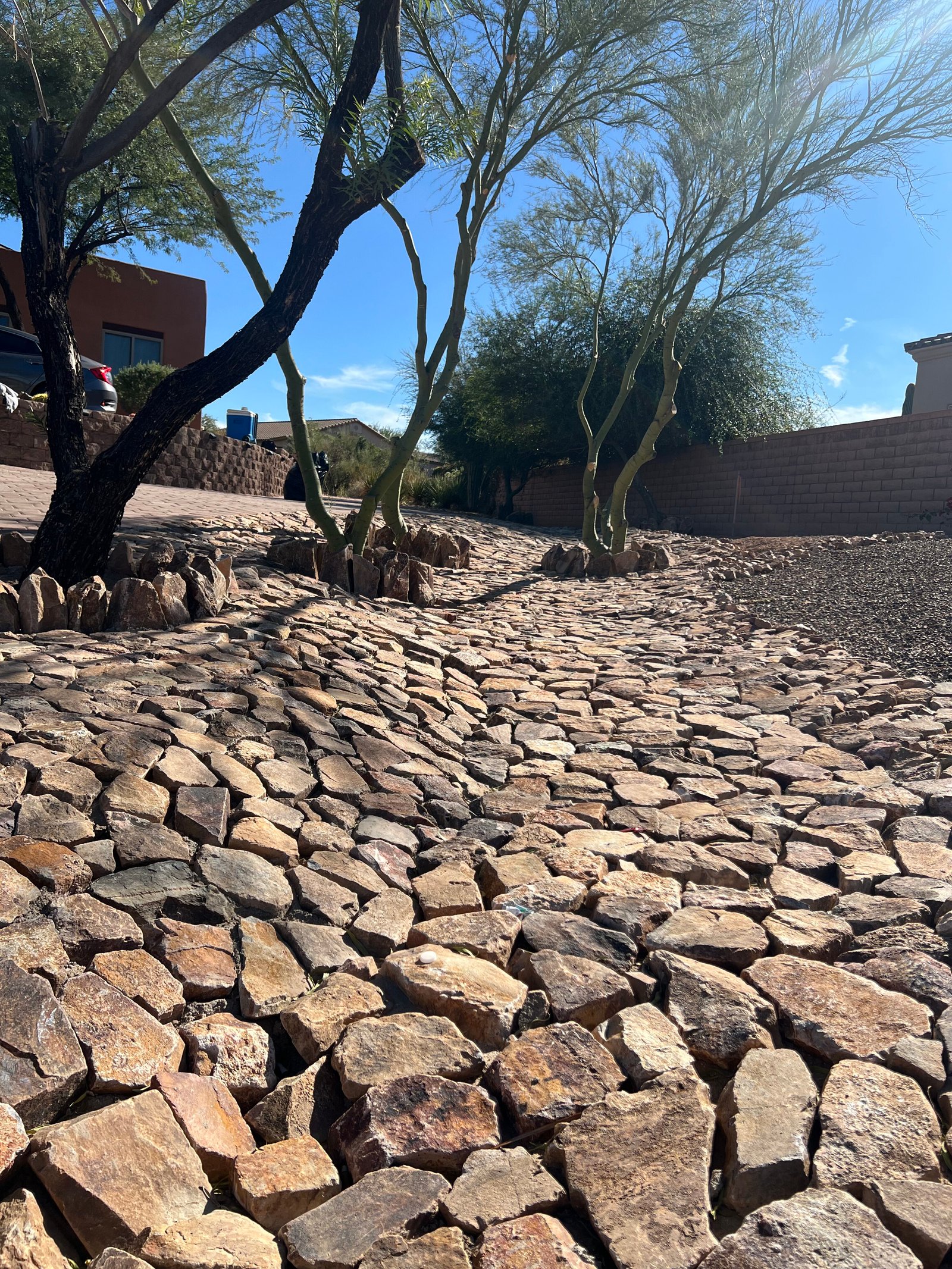
Why This Choice Matters in Tucson
Tucson is tough on outdoor surfaces. Summers bring triple-digit heat, the sun is relentless, and monsoon season can dump a lot of water in a short time. Add our dry, hard desert soil, and your patio, driveway, or walkway gets tested every year.
That’s why the material you choose matters. Let’s compare how each one holds up.
How Each Material Handles Desert Heat
Concrete
- Is one solid slab, so it expands and contracts as temperatures swing between hot days and cool nights
- Can develop cracks over time, even with control joints
- Can feel very hot underfoot, especially in standard gray or darker finishes
- Is hard to repair neatly, since patches often show
Pavers
- Are made of individual units with small joints between them, so the surface can move slightly without cracking
- Come in lighter colors that stay cooler to walk on
- Can be lifted and replaced if one piece gets stained or damaged
- Keep their color well when you choose quality, outdoor-rated products
Our team at Legacy Landscaping and Design often recommends lighter tones for pool decks and patios, because bare feet and Tucson summers don’t mix well with dark surfaces.
How Each Material Handles Monsoon Season
Monsoon storms bring heavy rain, fast runoff, and sometimes washouts. Here’s how your surface reacts.
Concrete is a solid, sealed surface. Water can’t soak in, so it runs off quickly. That runoff can pool in low spots, push toward your foundation, and erode soil at the edges.
Pavers let water move through the joints between them, and permeable styles allow even more drainage. Less runoff means fewer puddles and less stress on nearby plants.
Pavers also hold up better if the soil underneath shifts after heavy rain. A single paver can be re-leveled. A cracked slab usually means a bigger repair.
Side-by-Side Comparison
| Feature | Pavers | Poured Concrete |
| Heat tolerance | Very good, especially lighter colors | Good, but can crack |
| Monsoon drainage | Excellent (joints and permeable options) | Limited, more runoff |
| Repairs | Replace individual pavers | Patching or slab replacement |
| Design options | Many colors, shapes, and patterns | Limited, mostly stamped or stained |
| Upfront cost | Higher | Lower |
| Long-term value | Strong | Moderate |
The Cost Question
Let’s be honest: concrete usually costs less on day one. If you’re on a tight budget or need a basic surface quickly, it can work.
But think about the full picture. Cracks, stains, and repairs can add up over time. Pavers cost more at the start, yet they often last longer and look better with simple upkeep. Many homeowners find that pavers Tucson projects pay off in curb appeal and resale value, too.

Pairing Hardscape With Desert Plants
A great patio or walkway looks even better with the right plants around it. Native choices thrive in our climate and need little water.
- Creosote bush: A tough Sonoran Desert native that handles heat with ease. It also gives off that famous fresh-rain scent after a monsoon storm.
- Queen’s Wreath: A colorful, fast-growing vine with pink flowers. If you’ve been searching for queen’s wreath, it’s a great choice for trellises and patio walls, since it loves summer heat. Just give it room, because it can spread.
- Agave and desert spoon: Bold shapes that look great beside pavers and need almost no care.
- Palo verde: A shade tree that cools your patio naturally.
Placing plants a little away from paver edges helps roots and pavers coexist peacefully.
Which One Should You Choose?
Choose pavers if you:
- Want a surface that handles heat and storms well
- Care about style and curb appeal
- Prefer easier, cleaner repairs
- Want a long-term upgrade
Choose concrete if you:
- Need the lowest upfront cost
- Want a simple, functional surface
- Are covering a large area on a tight budget
Don’t Forget the Rest of Your Yard
A new patio or walkway is a great time to rethink the whole space. If you’re tired of watering and mowing, artificial grass installation Tucson homeowners choose can save water and keep your yard green all year. Paired with pavers, it creates a clean, low-maintenance look that holds up through our hottest months and wettest storms.
Ready to Start Your Project?
Whether you pick pavers, concrete, or a mix of both, the key is proper installation. A strong base, correct drainage, and quality materials make all the difference in our desert climate. At Legacy Landscaping and Design, we build outdoor spaces made to last, and we’d love to help you plan yours. Visit legacylandscaper to get started.
Frequently Asked Questions
1. Are pavers hotter than concrete in Tucson?
Not necessarily. Lighter-colored pavers often stay cooler than standard concrete. Color and material matter more than the type, so choose light tones for pool decks and patios.
2. Do pavers last longer than concrete in the desert?
In most cases, yes, pavers flex with the ground and don’t crack as easily. With proper installation, they can last for decades.
3. Can pavers handle Tucson’s monsoon rain?
Yes, water drains through the joints, and permeable pavers drain even better. This reduces puddles and runoff around your home.
4. Is concrete cheaper than pavers?
Concrete usually costs less upfront. Pavers cost more at first, but they can save money on repairs over time.
5. Can I combine pavers with native plants like creosote bush or Queen’s Wreath?
Absolutely, both plants thrive in Tucson heat and look great near paver patios. Just leave some space so roots and vines don’t interfere with the surface.