


Short Answer: Gravel is generally the better choice for larger, low-traffic areas where drainage and heat resistance matter most, while artificial turf works best for defined play areas, pet zones, or spaces where a soft, green look is the priority. Most well-designed landscaping Tucson yards actually use both gravel for structure and drainage, turf for the areas people actually walk and sit on rather than choosing one exclusively.
If you’re redesigning a yard and trying to decide between gravel and turf, you’re really choosing between two very different approaches to ground cover, each with real strengths and real trade-offs in Tucson’s climate. Here’s how to think through the decision properly.
Why This Decision Matters in Tucson
Ground cover isn’t just a design detail it affects water use, heat management, maintenance time, and how comfortable your yard actually feels to spend time in. Tucson’s intense summer heat and sudden monsoon rain put real pressure on whatever you choose, so it’s worth understanding how each option actually performs here, not just how it looks in photos.
Gravel: The Case For
Gravel has long been a staple of desert landscaping, and for good reason.
Advantages of gravel:
- Excellent drainage, which helps manage monsoon runoff rather than letting water pool
- Very low maintenance no watering, mowing, or replacement needed over time
- Wide range of colors and sizes to match different design styles
- Works well around native plants, pathways, and larger open areas
- Generally lower upfront cost compared to turf, especially for large spaces
Where gravel falls short:
- Can get quite hot underfoot during peak summer months
- Not ideal for areas where kids or pets play barefoot regularly
- Requires occasional raking or weed control to keep it looking tidy
- Small stones can migrate onto patios or into pool areas over time
Turf: The Case For
Artificial turf has grown enormously in popularity across Tucson yards, largely because it solves a very specific problem: wanting green, soft ground cover without the water demands of a real lawn.
Advantages of turf:
- No watering, mowing, or seasonal dead patches, even through extreme heat
- Comfortable, soft surface for kids, pets, or bare feet
- Consistent green appearance year-round, regardless of drought conditions
- Excellent for defined play areas, dog runs, or small backyard lawns
Where turf falls short:
- Higher upfront installation cost compared to gravel
- Can retain heat in direct summer sun if lower-quality or improperly installed
- Requires proper drainage layers underneath to avoid pooling or odor issues with pets
- Not ideal for very large areas, where the cost adds up quickly compared to gravel
Side-by-Side Comparison
|
Factor |
Gravel |
Turf |
| Water use | None | None |
| Upfront cost | Generally lower | Generally higher |
| Comfort underfoot | Can get hot, uneven | Soft, consistent surface |
| Best use case | Large open areas, pathways | Play areas, pet zones, small lawns |
| Drainage | Excellent | Good, if properly installed |
| Maintenance | Occasional raking/weeding | Occasional rinsing/brushing |
What Should Actually Guide Your Decision
Rather than picking one material for the entire yard, think about what each specific area actually needs.
Choose gravel when:
- The area is large and mostly for visual structure, not activity
- You want strong drainage during monsoon season
- Budget is a bigger priority than a soft, lawn-like feel
- The space surrounds native plantings or pathways
Choose turf when:
- You want a defined, usable green space for kids or pets
- Comfort underfoot matters for how the space will be used
- You want a consistent, lawn-like look without real grass’s water demands
- The area is relatively contained rather than spanning the entire yard
Why a Combined Approach Often Works Best
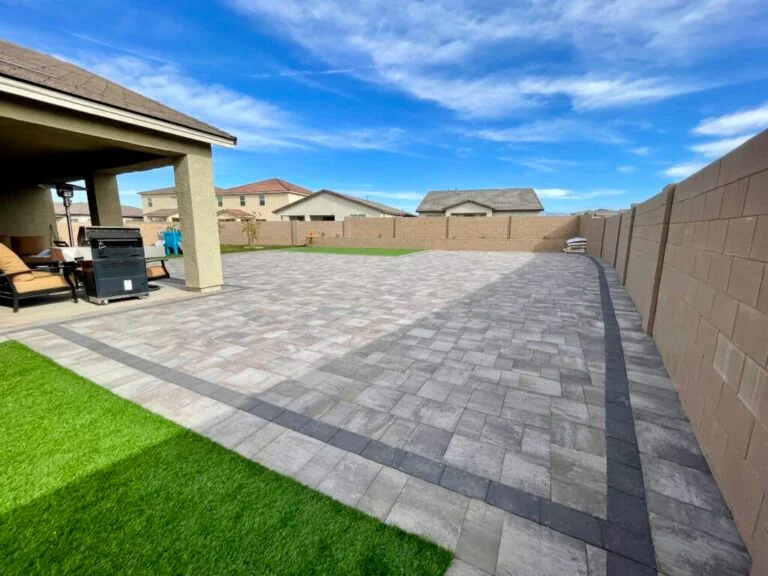
Many of the most successful residential landscaping tucson projects don’t choose one material exclusively; they use gravel for the majority of the yard where drainage and low maintenance matter most, then add a defined turf section for a play area or pet zone, and pavers for high-traffic patios and walkways. This combination gives you the practicality of gravel, the comfort of turf, and the durability of pavers Tucson homeowners rely on for the hardscape elements, all working together rather than competing for the same space.
A well-balanced layout might include:
- Gravel beds throughout most of the yard for drainage and structure
- A defined turf section near the patio for kids, pets, or relaxing
- Paver pathways and seating areas for durable, all-weather hardscaping
Common Mistakes to Avoid
- Installing turf without proper drainage, leading to pooling or odor issues
- Using gravel in high-traffic barefoot areas without considering heat retention
- Choosing one material for the entire yard instead of matching each zone to its actual use
- Skipping a weed barrier under gravel, leading to ongoing maintenance headaches
- Selecting low-quality turf that fades or retains excessive heat in direct sun
Bringing It All Together
Gravel and turf aren’t really competitors, they’re tools suited to different jobs within the same yard. Gravel excels at drainage, low maintenance, and covering large areas affordably, while turf delivers comfort and a green, usable space exactly where you need it. Pavers Tucson homeowners choose can also help define walkways, patios, and transition areas between gravel and turf. The best Tucson yards typically use all three, placed thoughtfully based on how each part of the space is used day to day.
At Legacy Landscaping and Design, we help Tucson, Marana, and Oro Valley homeowners figure out the right mix of gravel, turf, and pavers for their specific yard, budget, and lifestyle. If you’re stuck deciding between the two, it’s worth a conversation before committing to one material across the entire property.
Frequently Asked Questions
Can I use both gravel and turf in the same yard?
Yes, and it’s actually one of the most common and effective approaches in Tucson landscaping. Combining the two lets you get proper drainage where you need it and a soft, usable green space where it matters most.
Does artificial turf get too hot to walk on in summer?
Lower-quality turf can retain significant heat, but properly selected, heat-rated turf with the right infill performs much better underfoot. It’s worth asking specifically about heat performance before choosing a product.
Is gravel more affordable than turf overall?
Generally yes, especially for larger areas, since turf’s material and installation costs are higher per square foot. However, turf may offer better long-term value for smaller, high-use spaces.
Do I need a weed barrier under gravel?
Yes, a proper weed barrier significantly reduces ongoing maintenance and keeps the gravel area looking clean for much longer.
Which option is better for a yard with pets?
Turf is generally more comfortable and practical for pets, provided it’s installed with proper drainage to handle waste and prevent odor buildup over time.